

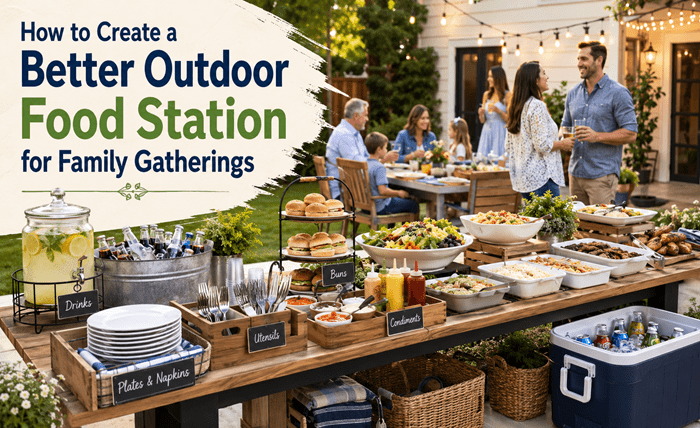
Family gatherings have a way of bringing everyone together around food. Whether it is a weekend barbecue, birthday lunch, summer reunion, or casual evening with relatives, much of the activity eventually centers on what is being cooked and served.
A thoughtfully planned outdoor food station can make these occasions much easier to manage. Instead of carrying plates, drinks, utensils, and ingredients back and forth from the kitchen, you can create one practical area where most of the essentials are already within reach.
The best setup does not have to look like a professional outdoor kitchen. A simple table, organized serving zones, comfortable access to drinks, and a sensible cooking area can completely change how smoothly the gathering feels. Good planning also means the host spends less time managing food and more time enjoying the people who came to visit.
Start With the Way Your Family Actually Uses the Space
Before buying additional furniture or rearranging the patio, think about how people naturally move through your backyard.
Where do guests enter? Where do children usually play? Where is the grill located? Which part of the yard stays comfortable during the hottest part of the afternoon?
These small details should guide your outdoor cooking setup.
For example, placing the food table directly beside a busy doorway might seem convenient for bringing dishes outside, but it can quickly create a traffic jam. Likewise, positioning the grill beside children’s games or the main seating area may create unnecessary safety and smoke problems.
A practical layout usually separates the space into a few simple areas:
- Cooking
- Food preparation
- Serving
- Drinks
- Dining and seating
- Waste and cleanup
These areas do not need physical walls between them. The goal is simply to prevent everyone from gathering in the same small spot.
Build an Outdoor Food Station Around Three Simple Zones
One of the easiest ways to organize food outdoors is to divide the main serving area into preparation, serving, and storage zones.
Preparation Zone
Keep ingredients and tools needed during cooking close to the person preparing the meal.
Depending on the menu, this could include cutting boards, serving spoons, seasoning, sauces, paper towels, oven gloves, and clean trays.
Avoid filling this space with decorative items. A preparation surface becomes surprisingly crowded once cooking begins.
If raw meat is being prepared outdoors, use separate utensils and boards for raw and ready-to-eat foods. It is also helpful to keep cleaning supplies nearby rather than making repeated trips indoors.
Serving Zone
The serving section should be easy for guests to reach without interfering with cooking.
Arrange dishes in the order people are likely to need them. Plates can come first, followed by main dishes, side dishes, condiments, and utensils.
This simple change helps prevent people from moving backward through the line.
For larger gatherings, consider serving food from both sides of a long table. It is one of the easiest backyard gathering ideas for reducing congestion when several relatives decide to eat at the same time.
Storage Zone
Not everything needs to remain visible.
Containers, extra napkins, backup utensils, food covers, unopened condiments, and replacement serving dishes can stay underneath the table or inside outdoor storage.
Keeping reserve items nearby makes the station functional without making the surface look cluttered.
Improve Your Outdoor Cooking Setup Without Overcomplicating It
A successful outdoor cooking setup is usually more about convenience than expensive equipment.
Start with the cooking method you already use most often. That might be a gas grill, charcoal grill, portable griddle, pizza oven, or another outdoor appliance.
Then build the surrounding workspace around it.
A small side table can provide enough room for uncooked ingredients and completed dishes. Hooks can keep frequently used grilling tools accessible. A covered container can hold clean utensils, while another can collect used ones.
Think about what normally sends you back into the house while cooking.
Salt? Serving plates? Tongs? Oil? Paper towels?
Those repeated trips reveal exactly what your outdoor area is missing.
You should also consider lighting if your gatherings continue after sunset. Good task lighting around cooking surfaces is more useful than relying entirely on decorative string lights.
Create a Separate Drink Area
Drinks can create almost as much traffic as food.
When beverages are stored directly beside the meal, guests repeatedly return to the serving table for water, juice, soda, or another drink. Separating beverages creates a more natural flow.
A simple outdoor drink station can be positioned several steps away from the main food table so family members can refill their glasses without interrupting meal service.
Include cups, ice, water, and frequently requested drinks in the same area. For longer events, keeping beverages properly chilled is especially important.
It is also worth placing water where children can reach it safely without having to stand near the grill or other cooking equipment.
Make Food Safety Part of Family Party Preparation
Good family party preparation should include more than choosing recipes and arranging tables.
Outdoor temperatures can affect food quickly, particularly during warm-weather gatherings. Perishable foods should not remain outside longer than necessary, and cold dishes should be kept properly chilled until serving.
Instead of placing every dish outside at once, bring out smaller portions and replenish them when needed.
Food covers are useful too. They help protect dishes from insects, leaves, dust, and other outdoor debris.
Pay extra attention to items such as:
- Meat and poultry
- Seafood
- Dairy-based dishes
- Egg dishes
- Cut fruit
- Cream-based desserts
- Mayonnaise-based salads
Hot food should also be kept appropriately hot until it is served.
These precautions do not need to make the event feel formal. They simply reduce avoidable problems while allowing everyone to enjoy the meal safely.
Choose a Menu That Works Outdoors
Some meals are easier to serve outside than others.
A complicated menu requiring constant last-minute preparation can keep the host trapped at the cooking station. For relaxed outdoor entertaining, choose dishes that can either be prepared ahead or finished quickly.
Grilled proteins, vegetable skewers, salads, sandwiches, wraps, pasta dishes, fruit, dips, bread, and simple desserts often work well.
Consider serving one or two standout dishes rather than trying to prepare ten different options.
It is also helpful to think about how guests will eat.
A beautifully prepared dish might not be practical if everyone needs a knife, fork, separate sauce bowl, and several minutes of table space to eat it.
For informal gatherings, food that can be served easily usually creates a more comfortable experience.
Plan for Children and Older Family Members
Good backyard gathering ideas should work for more than one age group.
Children may need smaller cups, simple foods, and a serving area they can reach safely. Older family members might prefer proper chairs with back support rather than low outdoor seating.
Keep walking routes clear and avoid running electrical cables or garden hoses across high-traffic areas.
Shade matters as well.
A patio umbrella, canopy, pergola, or naturally shaded section of the yard can make a major difference during afternoon gatherings. Food tables should also be protected from direct sunlight whenever possible.
These details are easy to overlook during family party preparation, but they often determine how comfortable guests actually feel.
Keep the Table Functional, Not Overdecorated
Outdoor gatherings naturally encourage decorative touches. Flowers, tablecloths, lanterns, and seasonal decorations can make the space feel inviting.
But decorations should never take over the working area.
For an outdoor food station, leave plenty of open surface space for dishes, serving tools, plates, and guest movement.
Use decorations around the food rather than directly in the middle of it.
For example, small plants can sit at the ends of a long table. String lights can hang above the gathering area. Decorative signs or lanterns can be placed near seating instead of beside serving dishes.
The station should still look attractive, but functionality should come first.
Make Cleanup Part of the Layout
Cleanup becomes much easier when you plan for it before guests arrive.
Place clearly visible waste and recycling containers somewhere accessible but not directly beside the dining table.
A small tray or container for dirty utensils is helpful too. Guests are more likely to return items to the correct place when the system is obvious.
Keep extra trash bags, wipes, paper towels, and cleaning cloths close to the food area.
After the meal, transfer leftovers into storage containers instead of leaving large serving dishes outside.
This approach keeps outdoor entertaining relaxed even after everyone has finished eating.
FAQs About Outdoor Food Stations
What should be included in an outdoor food station?
A basic station should include enough surface space for serving food, plates, utensils, napkins, condiments, and frequently used cooking supplies. Additional storage underneath the table can hold backup items and cleanup materials.
How can I create an outdoor food station on a small patio?
Use vertical storage, a compact folding table, or a narrow serving cart. Keep the menu simple and create separate food and beverage areas only when space allows. Even a small patio can work well when unnecessary items are removed.
Where should an outdoor cooking setup be located?
Place cooking equipment on a stable surface away from children’s activity areas, crowded seating, and flammable materials. There should also be enough surrounding space for the cook to move comfortably.
How do I keep food cold during outdoor entertaining?
Keep refrigerated food indoors or in reliable chilled storage until shortly before serving. You can also serve smaller portions and replace them as needed rather than leaving the entire dish outside.
How far ahead should family party preparation begin?
Basic planning can start several days beforehand. Prepare the menu, seating, serving equipment, and shopping list early. On the day of the gathering, focus mainly on fresh food preparation and arranging the outdoor area.
Conclusion
A better outdoor food station does not require a complete backyard renovation. The biggest improvements usually come from thoughtful organization: separating cooking from serving, giving drinks their own area, keeping essential tools nearby, and considering how guests will move through the space.
A practical outdoor cooking setup also reduces unnecessary trips to the kitchen, while smart family party preparation helps food stay safe and guests stay comfortable.
Ultimately, good outdoor entertaining should feel easy rather than carefully staged. When plates, food, drinks, seating, and cleanup supplies all have logical places, the host can spend less time solving small problems and more time talking, eating, and enjoying the gathering with family.